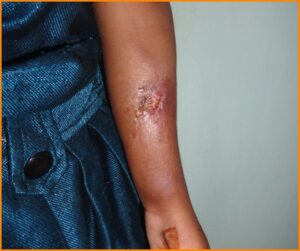
What is Infection in the bones of children called as?
infection in the bone is called osteomyelitis. When It develops over a short time it’s called acute osteomyelitis. In children, osteomyelitis is more common in the long bones of the arms and legs. But it can affect any bone in the body. Osteomyelitis can happen in children of any age. About half of the time, it happens in children younger than 5 years old.
What causes acute osteomyelitis in a child?
Osteomyelitis happens when a bacterial infection from another part of the body spreads to the bone. In children, an infection in the blood is a common cause of osteomyelitis. This is because a child’s growing bones have an increased blood supply. That makes it easier for the bacteria to get into the bone. An infection from nearby soft tissue or from a wound may also lead to osteomyelitis.
In children, the bacteria that most often cause osteomyelitis is Staphylococcus aureus or “Staph.”
What are the symptoms of osteomyelitis in a child?
These are common symptoms of osteomyelitis:
- Fever
- Fussiness or grouchiness
- Tiredness
- The following may happen in the area of the infected bone:
- Soreness or pain
- Not using the affected arm, leg, or other part of the body
- Swelling
- Redness
Get medical care right away if you think your child has osteomyelitis because its an orthopaedic emergency. Some of these symptoms may be caused by other health problems. Always talk with your child’s healthcare provider for a diagnosis.
How is osteomyelitis diagnosed in a child?
The sudden development of symptoms and the physical exam are key to diagnosing osteomyelitis.
Your child may have the following tests:
- Blood culture. A blood sample is checked for bacteria.
- Blood tests. Some abnormal results mean there is an infection in the body.
- Imaging tests. X-rays usually are normal in first 8-10 days of symptoms. Instead of CT scan MRI with contrast is the preferred investigation. It helps in detecting the infection at earliest stage to avoid further harmful effects.
How is osteomyelitis treated in a child?
Treatment will depend on your child’s symptoms, age, and general health. It will also depend on how severe the condition is.
If the MRI just suggestive of acute osteomyelitis it’s a SURGICAL EMERGENCY!!! The surgery is called decompression & drainage of acute osteomyelitis. The pus removed is sent to lab for identification & culture of the bacteria followed by finding out which antibiotic will be effective against it. Antibiotics will first be given through an IV (intravenous) line into a vein. Your child will have IV medicines for at least a few days. In some cases this is done for a few weeks. This is often followed by several weeks of antibiotics taken by mouth (oral). Other treatment will be given to ease pain.
What are possible complications of osteomyelitis in a child?
Most of the time, antibiotics get rid of the infection. The infection can become long-term or chronic, but that’s not common in children.
When should I call my child’s healthcare provider?
Call the healthcare provider if your child has any of the following:
- Fever of 100.4°F (38°C) or higher, or as directed by your provider
- Fussiness or grouchiness
- Tiredness
Also call the provider if your child has any of these in the area of the infection:
- Soreness or pain
- Not using that part of the body
- Swelling
- Redness
Key points about osteomyelitis in children
- Osteomyelitis is an infection in the bone.
- In children, it’s more common in the long bones.
- In children, it is often from a blood infection.
- Surgery is essential & should be done as early as possible.
- Antibiotics are used to treat osteomyelitis.